

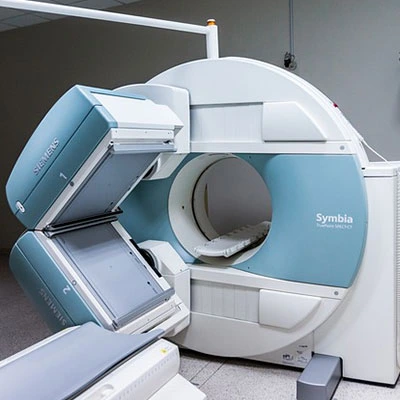
Description
Test Preparation
To ensure accurate results, follow these preparation guideline:
Clothing & Accessories:
• Wear loose, comfortable clothing without metal components (zippers, buttons, or hooks).
• Remove all metal objects, including jewelry, piercings, and watches.
Medical History & Safety Precautions:
• Inform your doctor if you have:
• Metal implants (e.g., pacemakers, artificial joints, screws, or plates).
• Claustrophobia (a mild sedative may be provided if needed).
• A history of kidney disease (if contrast dye is required).
• Pregnancy or breastfeeding (to assess safety).
Fasting & Contrast Injection (If Required):
• Fasting is not required unless your doctor orders a contrast-enhanced MRI.
• If contrast dye (gadolinium-based) is needed, you may be asked to fast for 4–6 hours before the test.
• Drink plenty of water unless advised otherwise.
During the Scan:
• The procedure lasts 30–60 minutes.
• You will need to lie still on the MRI table to ensure clear imaging.
• The MRI machine makes loud tapping noises; earplugs or headphones will be provided.
• If contrast dye is required, it will be injected through an IV.
• If you feel uncomfortable, you can communicate with the technician via an intercom.
After the MRI:
• If no sedation or contrast was used, you can resume normal activities immediately.
• If contrast dye was administered, drink plenty of water to help flush it out of your system.