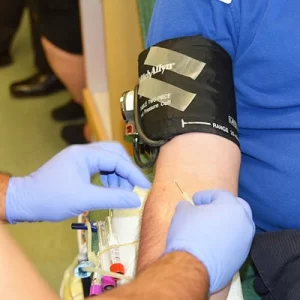


Description
Why It’s Done:
The VDRL test is done to:
1. Screen for Syphilis:
o Used as an initial screening tool in routine STI panels, blood donations, antenatal check-ups, and before surgeries.
2. Confirm Syphilis Diagnosis:
o If the result is positive, further confirmatory tests like the TPHA (Treponema Pallidum Hemagglutination Assay) or FTA-ABS may be done.
3. Monitor Treatment Progress:
o Used in people already diagnosed with syphilis to monitor response to treatment and track disease activity.
4. Investigate Symptoms:
o Ordered when symptoms such as genital sores, rashes, or unexplained fever are present and syphilis is suspected.
Preparation:
• Fasting:
o No fasting is required. You can eat and drink as usual before the test.
• Medications:
o Inform your healthcare provider about any medications, especially antibiotics, as they may affect the results.
• Medical History:
o Share details of any prior STI, unprotected sexual activity, or pregnancy, as these factors can influence testing and diagnosis.
• CSF Sample (if needed):
o If VDRL is done on cerebrospinal fluid (for suspected neurosyphilis), a lumbar puncture is required, which has different preparation guidelines provided by your doctor.