

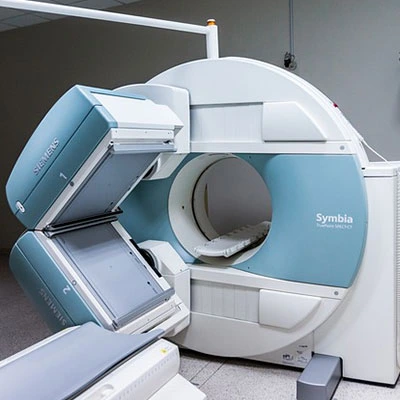
MRI Angiography Per Part (Without Contrast)

11,000.00

Categories: ,

MRI Angiography (MRA) is a non-invasive imaging technique used to visualize blood vessels in specific areas of the body. Unlike traditional angiography, it does not require catheter insertion. When performed without contrast, MRA relies on specialized MRI sequences to highlight blood flow, making it a safer option for individuals who cannot tolerate contrast agents due to allergies or kidney issues.

Why is it Done?
MRA without contrast is used to diagnose and evaluate:

• Aneurysms (bulging or weakened blood vessels)
• Stenosis (narrowing of arteries)
• Vascular malformations
• Blood clots or blockages
• Carotid artery disease
• Peripheral vascular disease
Common Areas Scanned (“Per Part”)
• Brain (Cerebral MRA) – To assess stroke risk, aneurysms, or vascular conditions.
• Neck (Carotid MRA) – To check for narrowing of carotid arteries.
• Abdomen (Renal or Mesenteric MRA) – To evaluate blood flow to the kidneys or intestines.
• Extremities (Legs/Arms MRA) – To detect peripheral artery disease (PAD).

Enquiry Here

    Description

    Test Preparation

    To ensure accurate results, follow these preparation guideline:

    • Fasting: Not required unless advised by your doctor.
    • Clothing: Wear loose, metal-free clothing. Avoid zippers, buttons, or jewellery.
    • Medical History: Inform the technician if you have any implants (pacemakers, metal fragments, aneurysm clips, etc.).
    • Medications: Continue as usual unless instructed otherwise.
    • Pregnancy: Inform your doctor if you are pregnant or suspect pregnancy.
    • Claustrophobia: If you have anxiety in enclosed spaces, discuss sedation options with your doctor.
    • You will lie still on the MRI table while the machine captures images.
    • The scan is painless and typically lasts 30–60 minutes, depending on the area being examined.
    • You may hear loud thumping or knocking sounds; earplugs or headphones will be provided.