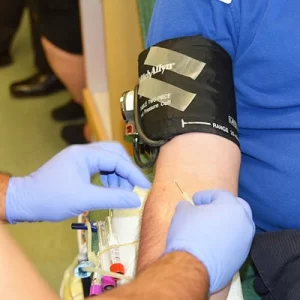
Description
Why It’s Done:
The AFP test helps evaluate the risk of certain conditions in the fetus. It is not a diagnostic test, but a screening tool. Abnormal AFP levels may indicate:
• Neural tube defects (e.g., spina bifida, anencephaly) – usually associated with high AFP levels
• Down syndrome (trisomy 21) and other chromosomal abnormalities – often associated with low AFP levels
• Multiple pregnancies (e.g., twins or triplets) – which may cause elevated AFP levels
• Miscalculated gestational age – since AFP levels vary with the age of the fetus
This test is typically done between 15 and 20 weeks of pregnancy, with 16–18 weeks being ideal for the most accurate results.
Preparation:
• No special preparation is usually required.
• Inform your doctor of the gestational age, weight, race, and any history of birth defects, as these factors can affect AFP levels.
• If you’re undergoing a quad screen, the lab will also test for hCG, estriol, and inhibin A along with AFP, which may help give a more accurate assessment.